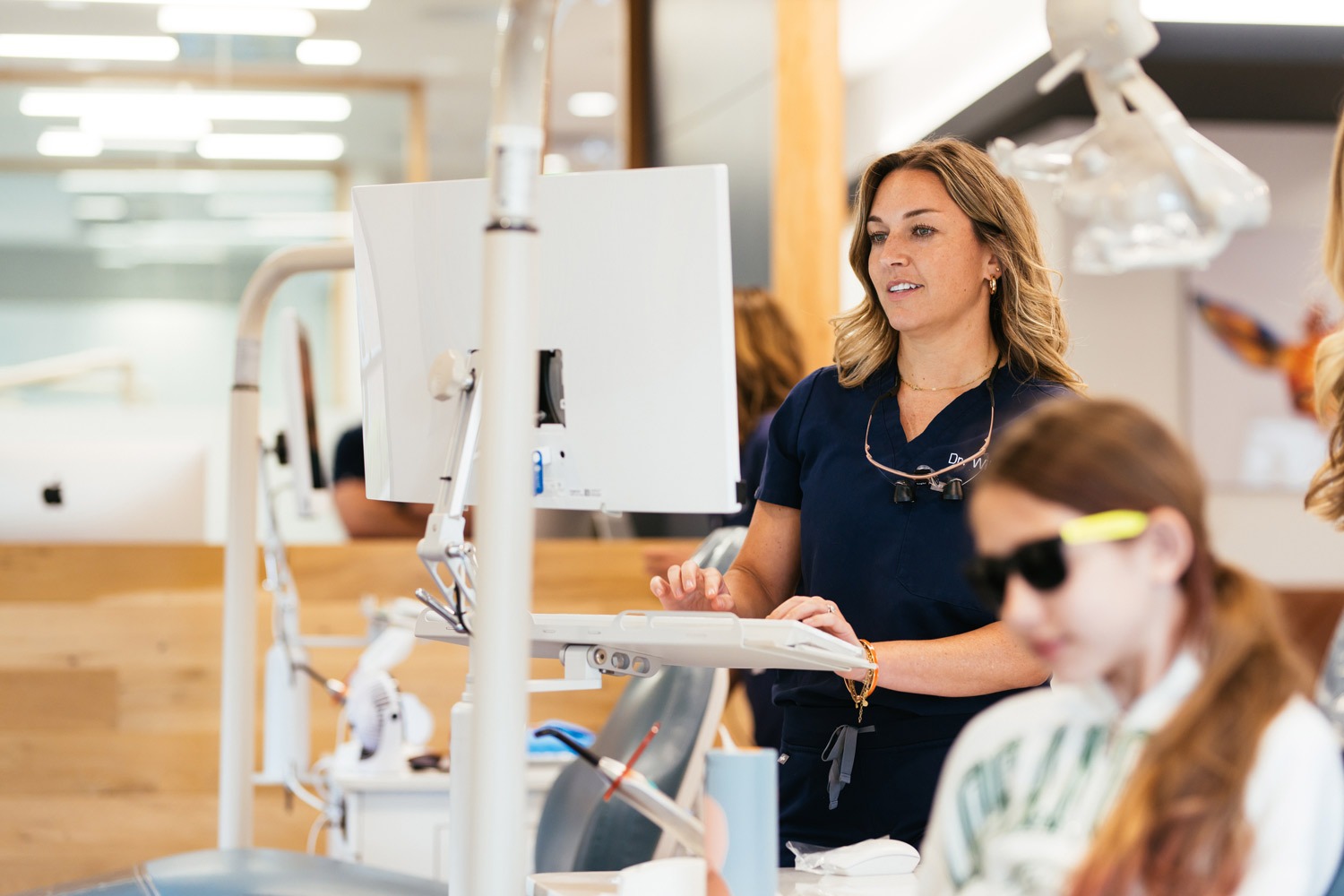
Most people think orthodontists only straighten teeth. But there’s a whole other side to what our doctors do — and it could change the way your child’s face develops.
Dentofacial orthopedics is the specialty focused on guiding the growth and development of the jaw and facial bones, not just moving teeth into alignment. It’s a form of facial growth correction that makes sure the foundation is right so teeth, jaws, and facial structure all work together the way they should.
At Sturgill Orthodontics in Johnson City, our team of board-certified orthodontists is trained in both orthodontics and dentofacial orthopedics — meaning we don’t just see the teeth. We see the whole picture: how your child’s jaws are growing, whether the upper and lower arches are developing at the right rate, and what we can do now to prevent bigger problems later.
Schedule Your Child’s Free Evaluation
What You’ll Learn in This Article
- What dentofacial orthopedics actually is (and how it’s different from regular orthodontics)
- Why timing matters so much for your child’s jaw development
- Which signs to watch for that suggest your child may need early intervention
- What appliances are used and what they do
- How our Johnson City team is uniquely qualified to provide this care
- What to expect at a dentofacial orthopedics consultation
Dentofacial Orthopedics vs. Orthodontics: A Quick Comparison
One of the most common questions we hear from Johnson City parents is, “Isn’t this the same as braces?” Not exactly. Here’s a simple way to think about it:
| Orthodontics | Dentofacial Orthopedics | |
|---|---|---|
| What it treats | Crooked, crowded, or gapped teeth | Jaw and facial bone growth imbalances |
| How it works | Moves teeth into proper alignment | Guides the growth and position of the jaw bones |
| Common tools | Braces, Invisalign, retainers | Palatal expanders, Herbst appliances, headgear, functional appliances |
| Best age to start | Once most permanent teeth are in (typically 9–14) | During active growth periods (often ages 7–10) |
| Primary goal | Straight teeth and a correct bite | Balanced jaw development and facial harmony |
| Who provides it | Orthodontists | Orthodontists with dentofacial orthopedics training |
| Can adults benefit? | Yes | Yes, though may require surgical assistance |
Here’s the key takeaway: orthodontics moves teeth, and dentofacial orthopedics shapes the bones that hold those teeth. Often, the two go hand in hand. A child might start with dentofacial orthopedic treatment to correct a jaw imbalance and then transition to braces for final tooth alignment — a phased approach that can shorten overall treatment time and deliver better long-term results.
The official dental specialty is actually called “orthodontics and dentofacial orthopedics,” and it’s one of twelve specialties recognized by the American Dental Association. Our doctors completed rigorous residency training in both disciplines.
Why Timing Matters: The Growth Window You Don’t Want to Miss
Dentofacial orthopedics is most effective during childhood and early adolescence, when the jaw bones are still actively growing. This is why the American Association of Orthodontists recommends every child have their first early orthodontic screening by age 7.
At age 7, your child has a mix of baby teeth and permanent teeth. This is called the “mixed dentition” phase, and it gives us a window to spot potential jaw growth issues while we can still influence them. Think of it this way: it’s much easier to guide a growing tree than to reshape a fully grown one.
During this critical growth period, appliances like palatal expanders can widen a narrow upper jaw, functional appliances can encourage a lower jaw that’s lagging behind to catch up, and early intervention can prevent bite problems from becoming severe enough to require surgical orthodontics later on.
That said, not every 7-year-old needs treatment. In many cases, we’ll evaluate your child, note any developing patterns, and simply monitor their growth over time. If and when treatment is needed, we’ll know the right moment to begin.
Is It Time for Your Child’s First Evaluation?
Signs Your Child May Benefit from Dentofacial Orthopedics
As a parent, you might notice some things that feel “off” about your child’s bite or facial development but not be sure if they’re a concern. Here are common signs that a dentofacial orthopedic evaluation in Johnson City could help:
Jaw-Related Signs
A lower jaw that appears to jut forward or sit too far back, difficulty chewing or biting into food, jaw clicking, popping, or pain, and noticeable asymmetry in the face are all signals worth getting evaluated. These can indicate the upper and lower jaws are growing at different rates or in different directions.
Breathing and Sleep Concerns
Chronic mouth breathing, snoring, or restless sleep in children can sometimes be linked to a narrow upper jaw or underdeveloped facial structure. Dentofacial orthopedic treatment can help expand the airway by widening the palate — which may improve both breathing and sleep quality.
Bite Issues
Crossbites (where upper teeth sit inside lower teeth), open bites, underbites, or severe overbites often have a skeletal component. If the problem is in the bone, moving teeth alone won’t fix it.
Early or Late Loss of Baby Teeth
If your child lost baby teeth significantly earlier or later than their peers, it can signal underlying growth issues worth investigating.
If you notice any of these patterns, a free consultation at Sturgill Orthodontics gives you a clear picture of what’s happening and whether early intervention would be beneficial.
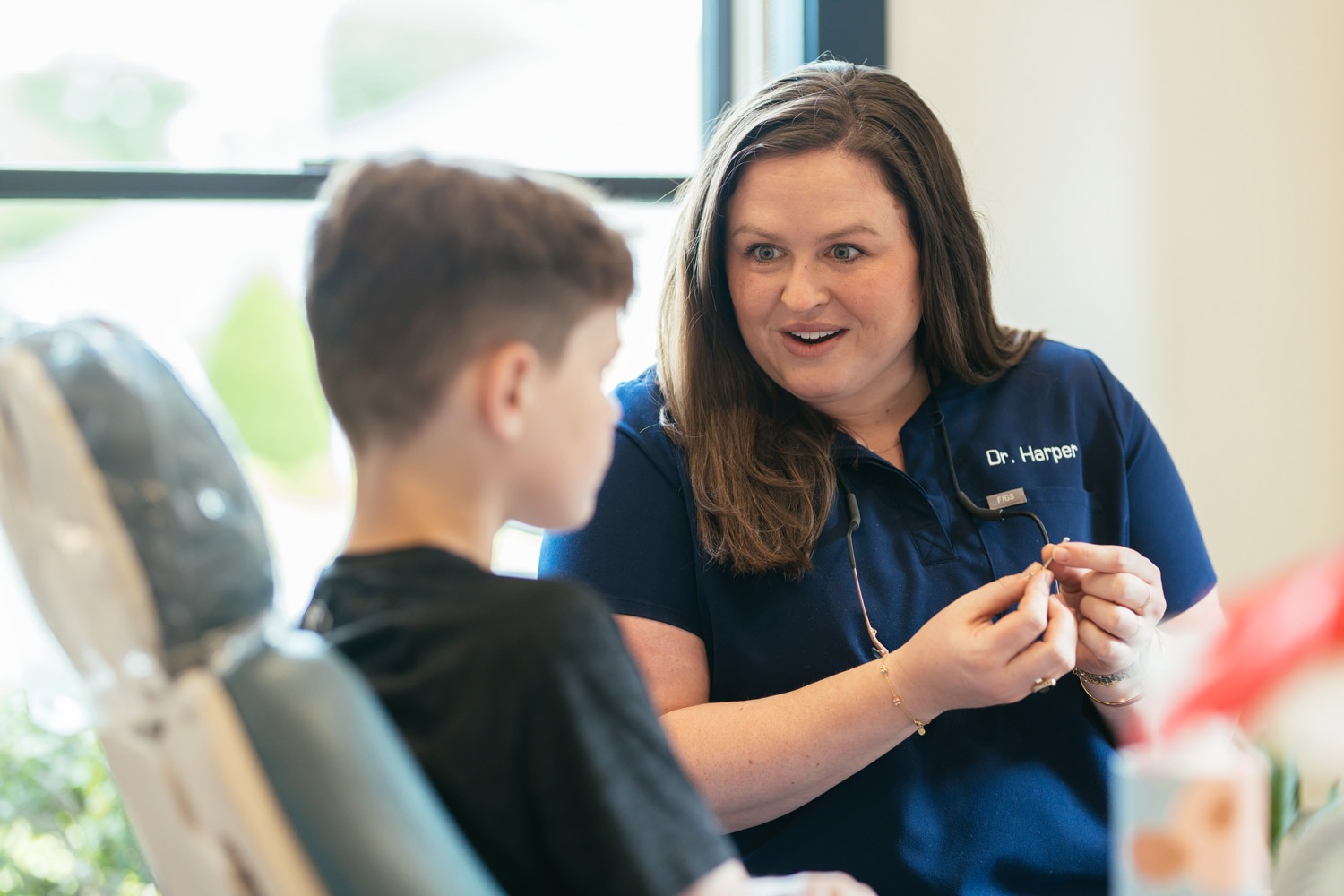
Common Dentofacial Orthopedic Appliances
The specific appliance your child may need depends on the type of jaw discrepancy we’re correcting. Here’s a look at the most common pediatric jaw treatment options:
Palatal Expanders
A palatal expander widens the upper jaw (maxilla) to correct crossbites, create space for crowded teeth, or improve airway dimensions. It takes advantage of the natural growth suture in the roof of the mouth, which hasn’t fused yet in growing children. Expansion is gentle and gradual — typically a small adjustment each day over several weeks.
Crossbow Appliance
This fixed appliance encourages forward growth of the lower jaw (mandible) in children whose lower jaw is positioned too far back. It’s commonly used for patients with a significant overbite that’s caused by a recessed lower jaw rather than protruding upper teeth.
Reverse-Pull Headgear (Facemask)
Used for children with an underdeveloped upper jaw, this appliance gently pulls the maxilla forward to improve the relationship between the upper and lower jaws. It’s most effective before age 10, when the facial bones are still responsive to this type of guidance.
Functional Appliances
These are removable appliances that work by repositioning the lower jaw and harnessing natural growth forces. They’re often used during growth spurts for maximum effectiveness.
Braces as Part of the Plan
In many cases, dentofacial orthopedic treatment is Phase 1 of a two-phase approach. After the orthodontic growth guidance phase corrects the jaw relationship, traditional braces, clear braces, or Invisalign may be used during Phase 2 to align the teeth into their final positions.
Learn more about our approach to early treatment on our Phase 1 Braces page.
Find Out Which Treatment Is Right for Your Child
Can Adults Get Dentofacial Orthopedic Treatment?
Yes — though the approach is different. In children, we can guide growing bones. In adults, the jaw bones have finished developing, which means we can’t reshape them with growth appliances alone.
For adults with significant jaw discrepancies, dentofacial orthopedic treatment often involves a combination of braces or Invisalign and orthognathic (jaw) surgery. Our team works with local oral surgeons to coordinate care for adults who need both tooth alignment and skeletal correction.
Adults dealing with TMJ or TMD symptoms may also benefit from a dentofacial orthopedic evaluation. Sometimes chronic jaw pain, headaches, or clicking are related to a jaw position problem that developed years ago and was never addressed.
The bottom line: if you’re an adult wondering whether your bite issues go deeper than just crooked teeth, a consultation can tell you exactly what’s going on and what your options are. Learn more about how we handle complex cases on our advanced orthodontic treatment page.
Why Sturgill Orthodontics for Dentofacial Orthopedics in Johnson City
Board-Certified Orthodontists with Dentofacial Orthopedics Training
Every orthodontist on our team completed advanced residency training in both orthodontics and dentofacial orthopedics. Dr. Jeremiah Sturgill completed his postgraduate orthodontic and dentofacial orthopedics program and also served as chief resident, completed rotations at the Barrow Neurological Institute Cleft and Craniofacial Center, and participated in research at Harvard School of Dental Medicine.
Dr. Allison Williams and Dr. Anne Miller Harper each bring their own specialized training and perspective as graduates from the esteemed Dentofacial and Orthopedics program at Virginia Commonwealth University. They received extensive training in treating patients with craniofacial anomalies, learned from the world leaders in orthodontic biomechanics, and researched cutting edge technologies like 3D printing. Both are Diplomates of the American Board of Orthodontics, a distinction earned by only about 40% of practicing orthodontists.
This means complex dentofacial cases aren’t handled by a single doctor’s opinion. Our team collaborates, reviewing challenging cases together to develop the most effective treatment plan for your child.
Experience with Complex Cases
Our doctors have extensive training in cleft palate and craniofacial conditions, orthognathic surgery coordination, sleep apnea, and TMD/myofascial pain. We’re the practice that Johnson City dentists trust with their most difficult cases — and that experience carries over to every patient we treat, including children who need dentofacial orthopedic intervention.
1,635+
Five-Star Reviews From Real Patients
We have completed phase one and what a huge difference. I can’t speak highly enough of this office. I highly recommend them. They are amazing!!!
I cannot say enough wonderful things about Sturgill Orthodontics. Dr. Williams and Dr. Harper are exceptional and so is every one on their incredible staff. The entire office is always warm and welcoming — consistently providing a detailed, efficient, and informative experience. Now, it’s my daughter’s turn for orthodontic care and I know I can completely trust the same team to take care of her — I wouldn’t go anywhere else.
My daughter had a consult with Dr Williams today and I cannot say enough good things about how much we love her and this office! It’s so welcoming and friendly! The entire staff is so fun and professional at the same time! Dr. Williams addressed all our concerns and my daughter is thrilled she will be doing her treatment at this office!
I’m so thankful I chose Sturgill Orthodontics and specifically Dr. Williams for treatment! From start to finish, it was such a fun and positive experience. She explained everything clearly: how quickly my treatment could be completed and what to expect. Every visit to Sturgill Orthodontics was a joy. I’d recommend them to anyone, but only if you want great teeth. They don’t settle for less.
Advanced Technology
We use iTero digital scanning, digital X-rays, and in-house 3D printing to create precise diagnoses and custom appliances. No messy impressions — just accurate, efficient care that helps us track your child’s jaw growth in real time.
An Office Kids Actually Like
Let’s be real: orthodontic offices can be intimidating for kids. Our Johnson City office was designed to feel different. With a coffee bar (we call it “Sturbucks”), comfortable lounge areas, a prize wall, and Louie — our therapy dog — kids look forward to their appointments. That makes a big difference when treatment spans several months.
Meet Our Team and Tour the Office
What to Expect at a Dentofacial Orthopedics Consultation
Your child’s first visit at Sturgill Orthodontics is completely free and includes a comprehensive evaluation. Here’s what happens:
We’ll take a thorough look at your child’s teeth, bite, and jaw development using advanced digital imaging. One of our orthodontists will assess the relationship between the upper and lower jaws, evaluate facial symmetry and profile, and identify any growth patterns that could benefit from early intervention.
If we find that dentofacial orthopedic treatment would help, we’ll walk you through the recommended approach in plain language — what the appliance does, how long treatment typically takes, and what results to expect. If treatment isn’t needed yet, we’ll set up a monitoring plan so we can keep an eye on things as your child grows.
We’ll also go over financing and insurance options. We offer low down payments and flexible monthly payment plans to keep treatment accessible for Johnson City families.
If you’re looking for a Johnson City orthodontist for kids who can evaluate jaw growth and recommend the right timing for treatment, we’d love to meet your family.
Book Your Child’s Free Consultation
Serving the Entire Tri-Cities Region
Our Johnson City office is centrally located and easy to reach from throughout the region. We regularly see patients from Kingsport, Bristol, Elizabethton, Jonesborough, Gray, and communities throughout Washington County and Northeast Tennessee.
We also have offices in Bristol, TN and Norton, VA for added convenience. No matter where you are in the region, quality Tri-Cities orthodontic care is closer than you think.
Johnson City Office
801 Sunset Dr., Suite E5 Johnson City, TN 37604
Phone: (423) 282-2333
Hours:
Mon – Wed: 8:00 a.m. – 5:00 p.m.
Thur: 7:30 a.m. – 4:30 p.m.
Fri: 8:00 a.m. – 12:00 p.m.
Frequently Asked Questions About Dentofacial Orthopedics
What is dentofacial orthopedics?
Dentofacial orthopedics is a dental specialty focused on guiding the growth and development of the jaw and facial bones. Essentially, a dentofacial orthopedist is a jaw development specialist. While orthodontics moves teeth into alignment, dentofacial orthopedics addresses the underlying skeletal structure — the bones that hold those teeth. It’s most effective during childhood when the jaw is actively growing, though adults can also benefit with a modified approach.
Is dentofacial orthopedics the same as orthodontics?
They’re closely related but not identical. “Orthodontics and dentofacial orthopedics” is actually one combined specialty recognized by the American Dental Association. Orthodontics focuses on tooth movement; dentofacial orthopedics focuses on jaw and facial bone guidance. Our Johnson City orthodontists are trained in both.
At what age should my child be evaluated for dentofacial orthopedics?
The American Association of Orthodontists recommends a first evaluation by age 7. This is when a mix of baby and permanent teeth gives us the clearest picture of how the jaws are developing. Early evaluation doesn’t always mean early treatment — it means we can monitor and intervene at the ideal time if needed.
What happens if jaw growth issues aren’t treated early?
Untreated jaw discrepancies can become more difficult and more expensive to correct as a child finishes growing. Problems like a narrow palate, severe underbite, or recessed lower jaw may require surgical correction in adulthood if they’re not addressed during the growth window.
Does my child need a referral for a dentofacial orthopedics evaluation?
No. You can schedule a free consultation directly with Sturgill Orthodontics. No referral from your dentist is needed, though many Johnson City dentists do refer to us for complex jaw and bite cases.
How long does dentofacial orthopedic treatment take?
Phase 1 (growth modification) treatment typically lasts 6 to 18 months, depending on the specific issue being corrected. After Phase 1, there’s usually a resting period while remaining permanent teeth come in, followed by Phase 2 (braces or aligners) if needed for final tooth alignment.
Is dentofacial orthopedic treatment painful?
Most children tolerate treatment well. There may be mild pressure or soreness after adjustments — similar to what you’d expect with braces — but it’s generally manageable and short-lived. Our team will provide clear instructions on what to expect and how to stay comfortable.
How much does dentofacial orthopedic treatment cost in Johnson City?
Cost varies depending on the complexity of your child’s case and the type of appliance needed. During your free consultation, our team will provide a clear breakdown of costs and walk you through our flexible payment options, including low down payments and monthly plans.